
Urban digital twins are widely seen as a powerful tool for improving how cities plan, manage and optimise complex systems such as transport or energy. In practice, however, they remain difficult to scale. Most implementations are developed as stand-alone solutions. This makes them costly, complex and hard to transfer between cities, even when the underlying challenges are similar.
Voices of 8ra
This interview series highlights the leaders shaping the Multi-Provider Cloud-Edge Continuum across Europe. We explore the strategies and challenges driving innovation within the 8ra Initiative – set against the backdrop of shifting political priorities, rapid technological change, and evolving societal and economic needs that are redefining Europe’s digital future.
May 2026
In Conversation with
Jānis Kampars, Associate Professor, Riga Technical University &
Pēteris Ārājs, Solution Architect, DATI Group
Within the 8ra Initiative, the DigiTDevOps project takes a different approach. It introduces a modular platform built on standardised components and reusable patterns, with the aim of simplifying how digital twins are developed and operated.
In this interview, Jānis Kampars (Riga Technical University) and Pēteris Ārājs (DATI Group) explain how their work con-tributes to a more interoperable and resilient European cloud-edge ecosystem, and why openness and flexibility are key to broader adoption.
Jānis, Pēteris – who are you and what exactly are you building?
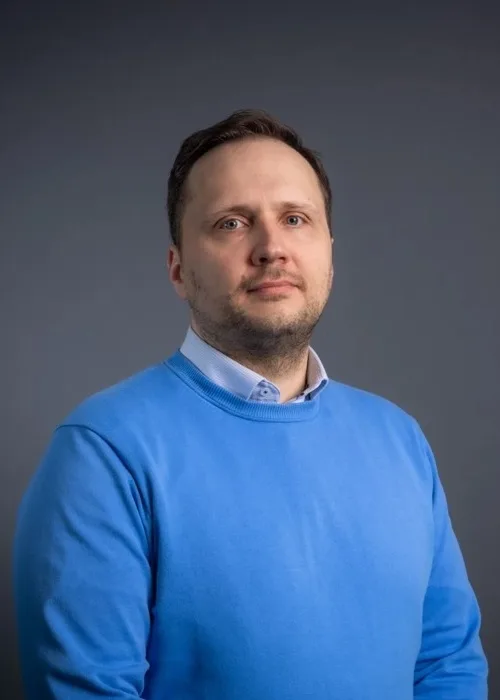
Jānis: “I am the scientific supervisor of the project and Associate Professor at Riga Technical University. At its core, we are developing a platform that allows digital twins to be created from reusable components rather than built as stand-alone systems. The idea is to manage the full lifecycle, from data integration to simulation, within a consistent framework.
Instead of treating every digital twin as a bespoke project, we approach it as a system that can be assembled. That includes defining how components interact, how data flows, and how models can be reused across different environments.”
Pēteris: “From DATI Group’s perspective, the focus is on making this work in practice. We provide the infrastructure, DevOps and platform services that allow these systems to run reliably in production. A key element is what we call a ‘constructor’: a way to assemble digital twins from predefined components. Combined with a simulation engine, this allows cities to model systems like transport without starting from zero every time.”
Why are digital twins still so difficult to scale today?
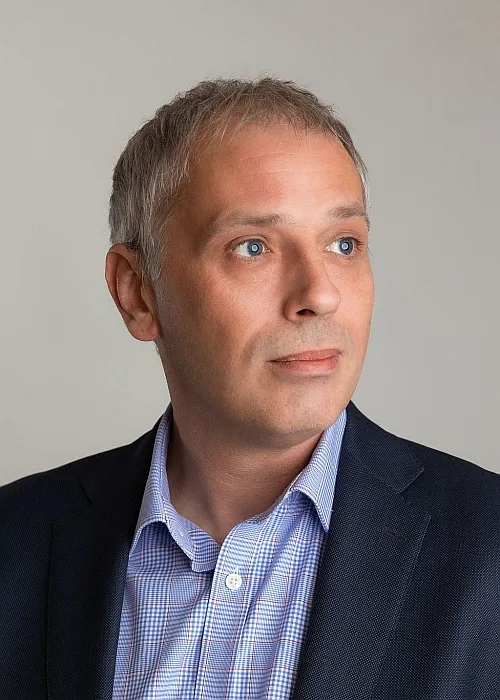
Jānis: “Because today, almost everything is built from scratch. Each project defines its own architecture, its own data models, its own processes. Even when the underlying problems are similar, the solutions are not transferable. What’s missing is a shared approach, both in methodology and infrastructure. Without that, scaling is not just difficult, it’s structurally impossible.”
What changes in practice when you move to a modular, platform-based model?
Jānis: “You shift from engineering individual solutions to assembling systems. That’s a fundamental difference. A traffic model developed in one city should not remain locked there. With reusable components and defined interfaces, it can be adapted and deployed elsewhere. That’s what creates real scalability.”
Pēteris: “And it changes timelines. It took us around nine months to build and stabilise the infrastructure, including integrating public data sources. But once that foundation is in place, new use cases can be deployed much faster. Cities don’t need to build everything themselves anymore. They can build on what already exists.”
Who stands to benefit most from this approach for urban digital twins?
Jānis: “Primarily cities and public sector actors, like urban planners, transport authorities, emergency services. But the impact goes beyond that. An open, modular platform creates opportunities for specialised developers as well. Today, many advanced solutions, whether simulation tools or machine learning models, are difficult to integrate into closed systems. That limits innovation.”
What does your work contribute to the broader 8ra ecosystem?
Jānis: “Our focus on standardisation and interoperability aligns closely with the objectives of 8ra. If digital infrastructure is to work across Europe, components must be compatible by design. We are contributing to that foundation.”
Pēteris: “We also provide infrastructure that others can use. Our testbeds are already being used by partners in other workstreams to validate how solutions perform in a federated setup.”
You deliberately avoided building this on a hyperscaler infrastructure. Why?
Jānis: “Avoiding dependencies is essential if you want to maintain flexibility over time. A vendor-agnostic approach allows the platform to be used in different environments without being tied to a single provider.”
Pēteris: “Technically, we could have built everything on a hyperscaler. That would have been faster. But it would also create dependency. And when you’re dealing with public infrastructure, that’s not just a technical decision, it’s a stra-tegic one. Cities need control over their systems. Otherwise, they risk losing it.”
Resilience plays an important role in your work. Why is it such a priority?
Pēteris: “In our region, resilience is not theoretical. Public services must continue to function under stress, whether that’s technical failure or external disruption. That’s why we focus on distributed infrastructure. For example, contain-er-based data centres can be physically relocated if needed, while workloads shift between locations in near real time. The system doesn’t depend on a single point of failure.”
Digital twins are often developed as isolated solutions. DigiTDevOps points to a different approach. By structuring them as modular systems based on reusable components, it becomes possible to move beyond individual implementations. This is closely aligned with the broader ambition of the 8ra Initiative. Building a federated cloud edge ecosystem in Europe requires solutions that are not only technically sound, but also interoperable and transferable across contexts. In that sense, DigiTDevOps demonstrates how digital solutions can be designed from the outset to work within a shared European infrastructure.
About Jānis Kampars and Pēteris Ārājs
Jānis Kampars is Associate Professor at Riga Technical University and scientific supervisor of the DigiTDevOps project. Pēteris Ārājs is Solution Architect at DATI Group, a Latvia-based IT company specialising in secure public sector infra-structure and system integration.
Their joint project DigiTDevOps focuses on developing a modular platform for building and operating urban digital twins based on reusable components and standardised patterns. As part of the 8ra Initiative, their work contributes to building interoperable, scalable and sovereign digital infrastructure across Europe.