
Cloud applications are often built with a specific provider in mind. While moving them elsewhere may be technically possible, doing so can require considerable time, effort and cost. The French IPCEI-CIS project E2CC – Eco Edge to Cloud Continuum wants to provide a more open and energy efficient alternative.
Voices of 8ra
This interview series highlights the leaders shaping the Multi-Provider Cloud-Edge Continuum across Europe. We explore the strategies and challenges driving innovation within the 8ra Initiative – set against the backdrop of shifting political priorities, rapid technological change, and evolving societal and economic needs that are redefining Europe’s digital future.
September 2026
In Conversation with François Exertier and Patrice Calegari, E2CC / Bull and Eviden
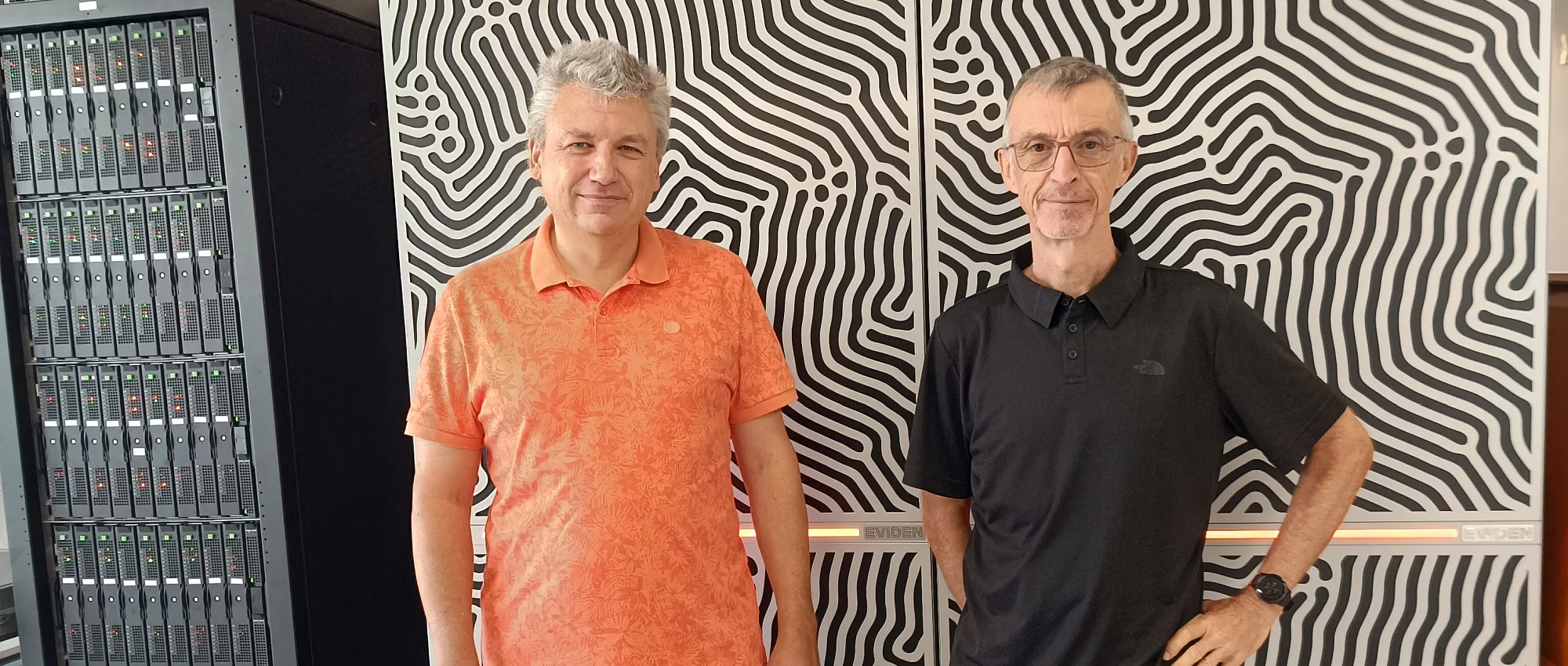
E2CC is developing an end-to-end platform designed to connect cloud, edge and on-premises infrastructure while reducing dependency on individual providers. Its approach combines common management and orchestration capabilities with services for areas such as AI, cybersecurity and sustainability. But openness isn’t only practiced on the platform architecture. The project also builds on technologies developed elsewhere in the 8ra ecosystem, extends existing open-source components where needed and aims to contribute improvements back to their communities.
In this interview, François Exertier and Patrice Calegari explain how E2CC approaches vendor independence, how applications can be orchestrated across different infrastructures, why security is non-negotiable, and why collaboration is by itself a crucial part of European digital sovereignty.
To start things off: can you briefly introduce yourselves and tell us about your work at Bull and Eviden?
Bull and Eviden are now two separate companies, but on E2CC they continue to work closely together, Bull bringing its high performance computing (HPC) infrastructure & application management expertise, Eviden contributing its expertise in cybersecurity. That combination shapes much of how the project approaches both performance and security.
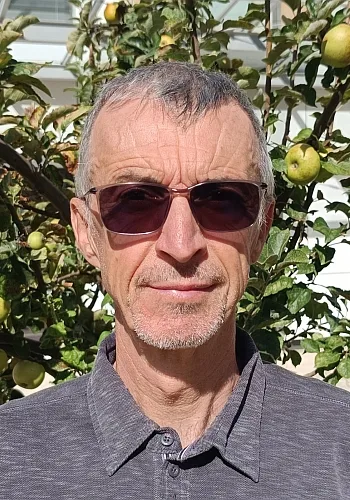
François: “Bull has a long history as a European technology company. Our main areas are HPC and AI. We develop supercomputers and enterprise servers, but also software that makes these computing capabilities easier to use. Personally, I work mainly on collaborative national and European technology projects. My background includes HPC, AI and open-source software and I am also involved in upcoming initiatives around AI semiconductors and quantum computing.”
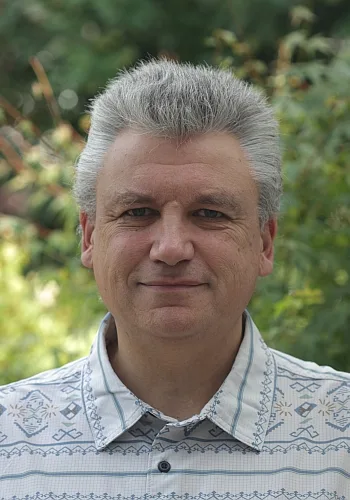
Patrice: “I have worked in HPC for more than 30 years and I am currently a technical leader for software R&D and an architect for the E2CC project. Over the years, I have worked in many different areas of HPC. What I found interesting is that many of the fundamentals we have known in HPC for decades are now also relevant to cloud, edge and AI: performance, energy efficiency and security. I really enjoy collaborative projects that bring together people from different technical domains, industries and cultures.”
E2CC aims to reduce dependency on individual cloud providers. What problem are you trying to solve in practice?
Patrice: “Right now, when companies build a cloud-based solution, they often already have a particular cloud provider in mind. As a result, the solution can become closely tied to that provider’s technologies and services. Changing providers is not impossible, but often costly and time-consuming, for example companies may have to study parts of the solution again or redo work they have already done. This is one of the things we want to address with E2CC.
We develop a platform that is not designed around one particular cloud provider, using standards as much as possible. We want to give users more freedom to choose which infrastructure they want to use. But we’re also looking at the long-term perspective. Europe currently has a limited number of cloud providers and we hope that more will emerge in the future. That is why an open technology should not only work with providers that exist today. It should also be able to support European providers that may emerge in the future. So, our platform enables an easy integration of new providers.”
François: “The platform covers the different elements needed for a cloud-edge application. At the infrastructure level, it provides monitoring and management capabilities for cloud resources, edge servers and on-premise infrastructure. An orchestration layer can deploy applications across these resources. On top of that, we provide optional services in areas like AI, cybersecurity, sustainability, and use cases in IoT and computer vision. The idea is to provide an end-to-end environment in which different types of infrastructure can be integrated through a common platform.”
If applications can run across cloud, edge and on-premises infrastructure, who decides where they should run?
Patrice: “There is a hierarchy of decisions. First, the infrastructure operator can define certain boundaries. Then the user, who knows the requirements of the application best, can set priorities. Within these rules, the system can automate the orchestration. The main parameters we balance are performance, energy consumption and cost. The priorities depend on the application. To give you an example, in weather forecasting, getting the result on time can matter more than minimising energy consumption.
Security is different. It is not something we negotiate. We don’t simply choose to have a little more or less security depending on cost or performance.”
One of E2CC’s use cases applies AI to rare diseases. How do you handle highly sensitive health data in such a distributed environment?
Patrice: “What’s crucial: the patient data stays in the hospital and the AI training is carried out locally. The resulting model can then be used beyond the local infrastructure. We also use privacy-enhancing techniques designed to prevent information about individual patients from being inferred from the model updates, while communication across the platform is secured and encrypted.
Of course, human oversight remains important as well.”
Sustainability is one of E2CC’s main objectives. How is energy efficiency incorporated into the platform?
Patrice: “We have monitoring capabilities that measure energy consumption and make this information available to users and operators. This includes reports and graphical interfaces, and the information can also be used as part of the policies that guide orchestration. The policy system is also designed to remain flexible. If regulations or other requirements introduce new boundaries in the future, these can be defined at a higher level. The system can then continue to automate decisions within those boundaries.
So, energy efficiency is not considered separately from the operation of the platform, but it’s one of the factors that can influence where and how an application is deployed.”
At the beginning of 2026, E2CC presented its shared testbed. How far has the platform progressed today?
François: “One of our commitments within the IPCEI-CIS was to provide a shared testbed for the partners working on E2CC, and this testbed is already available to them. At the end of the project, we also plan to provide an online demonstrator that can be accessed by a wider audience. We are developing the platform incrementally. Partners can deploy the technologies they are developing for orchestration, sustainability, AI or cybersecurity and test how these components work together.”
Patrice: “The testbed includes an environment where we simulate a generic cloud, because we deliberately do not develop for one particular cloud provider. We also have edge servers and dedicated cybersecurity infrastructure connected to the environment. This gives us the infrastructure required to develop, validate and demonstrate the different elements of the platform.”
François: “The complete end-to-end integration is still in progress. The use cases themselves are being developed in parallel and have not all been integrated into the platform yet. However, individual functions have already been tested. The use cases cover different fields, including computer vision, water networks management, predictive maintenance and AI for rare diseases. The goal is to demonstrate that the platform can support very different types of applications.”
E2CC is part of the 8ra ecosystem. How do you make use of technologies developed by other projects?
François: “We contribute to several 8ra workstreams and are also involved in cross-workstream activities on cybersecurity. The collaboration works both ways. The workstreams help us to identify common standards, frameworks and components and it ensures that what we develop is aligned with the wider 8ra architecture. At the same time, we contribute our own expertise and technologies.”
Patrice: “We do not want to reinvent the wheel. We use open-source software as much as possible and look at technologies that other projects have already developed. For example, we are working with technologies from Sylva, a Linux Foundation Europe project building open, cloud-native telecom infrastructure,and NeoNephos, a European initiative developing open-source cloud and edge technologies. We are for example interested in NeoNephos’s IronCore for bare-metal orchestration.
We select the components that fit our needs, and if something is missing, we can extend an existing technology. The important point is that this should not be a one-way process. If we develop an extension that can also be useful to the original project or community, our aim is to contribute it back. At the same time, E2CC develops new capabilities where we see gaps. Energy measurement and optimisation is one example.
So our approach is essentially: reuse whenever possible, extend where necessary and contribute the results back.“
What does this approach mean for European digital sovereignty?
François: “By the end of the project, we want an end-to-end platform with open-source components, platform services and use cases. This should provide a foundation that can support different applications and allow sovereign cloud providers and technologies to be integrated. We also want to reuse the technologies we developed here in future initiatives, for instance in AI and semiconductors projects.”
Patrice: “For me, there is also another important aspect of sovereignty: the fact that so many organisations from different parts of Europe are able to work together. Europe is not independent in every technology area. But in many areas, particularly in software, we have strong capabilities. The fact that so many European partners can work together is already a form of sovereignty. It demonstrates that we have the knowledge and expertise to develop technologies together. That ability to collaborate across countries, companies and technical domains is, to me, an important part of what European sovereignty means.
E2CC illustrates how several of the principles behind the 8ra Initiative come together in practice. A Multi-Provider Cloud-Edge Continuum requires more than just connecting individual infrastructures. Applications have to remain portable, different environments need to be manageable through common technologies and new solutions should avoid replacing one dependency with another.
At the same time, E2CC shows why collaboration between projects is so crucial. Instead of building every component independently, the project draws on technologies from across the 8ra ecosystem, adapts them to new requirements and aims to contribute improvements back. This creates a technological foundation that can evolve beyond a single project or provider.
In this sense, openness, interoperability and European cooperation reinforce each other. Digital sovereignty does not necessarily mean developing every individual technology independently. It also means having the capabilities, knowledge and collaborative structures required to combine technologies, develop them further and retain meaningful choices about how and where digital services are operated.”
About François Exertier and Patrice Calegari
François Exertier works on collaborative technology projects and has a background in high-performance computing, AI and open-source software. Patrice Calegari is an HPC expert with more than 30 years of experience and serves as a technical leader for software R&D and architect for the E2CC project.
E2CC – Eco Edge to Cloud Continuum is a French IPCEI-CIS project led by Bull. It is developing an end-to-end cloud-edge platform designed to integrate different infrastructure products while providing orchestration, cybersecurity, AI/MLOps and sustainability capabilities. The project aims to support interoperability and portability across the cloud-edge continuum while reducing dependency on individual providers.