
Raivis Skadiņš on how European cloud and AI solutions provide a viable path forward
Voices of 8ra
This interview series highlights the leaders shaping the Multi-Provider Cloud-Edge Continuum across Europe. We explore the strategies and challenges driving innovation within the 8ra Initiative – set against the backdrop of shifting political priorities, rapid technological change, and evolving societal and economic needs that are redefining Europe’s digital future.
October 2026
Could you briefly introduce yourselves, your companies, and your projects?
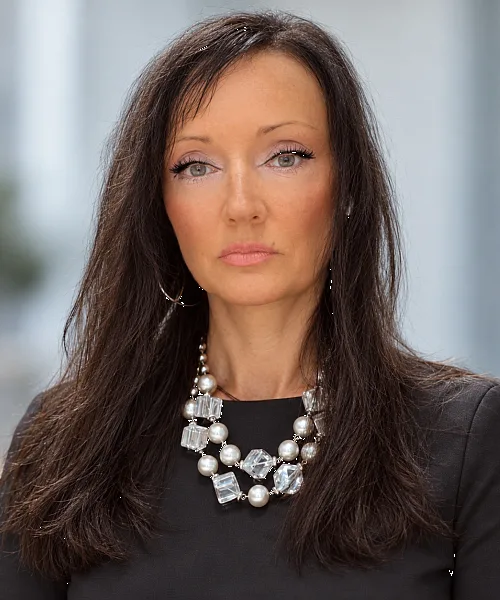
Inga Loseva: “I am part of the R&D team at Tilde, a Latvian technology company specialising in artificial intelligence and language technologies. It develops solutions that help people and organisations communicate across languages and interact with digital systems more naturally. Within 8ra, our focus is on building AI agents that act as a bridge, enabling non-technical users to interact seamlessly with complex technical systems.”
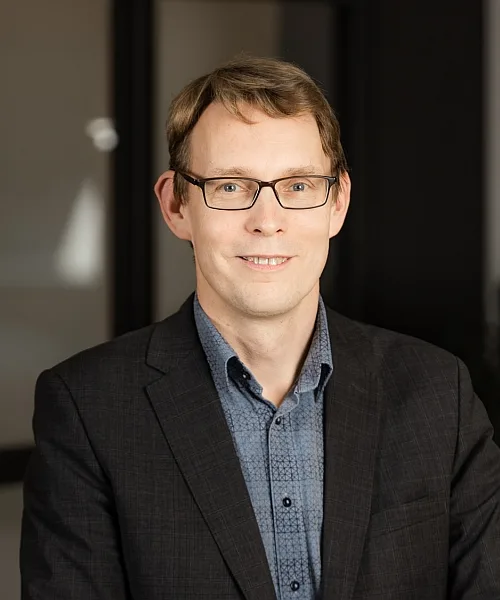
Raivis Skadiņš: “I am the CTO at Tilde. Our role in 8ra is to develop language technology components that can be easily deployed across sovereign European cloud and edge infrastructures. This joint effort is a great example of how our AI assistants can be adapted to a highly complex, real-world industrial use case.”
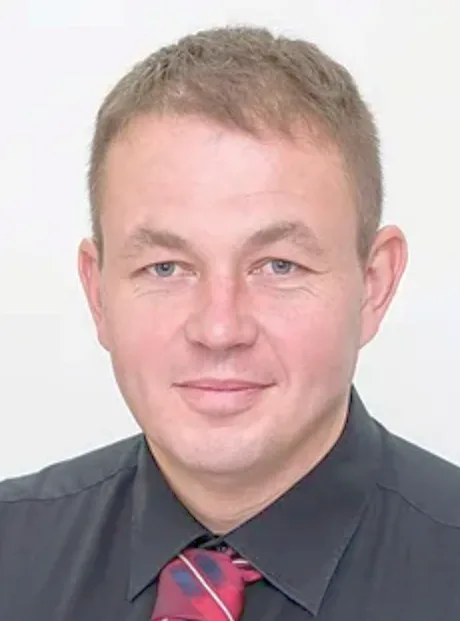
Tomaž Bergant: “I am the CEO and co-founder of ResEvo, based in Slovenia. We essentially handle the ‘data plumbing’ for smart factories, bridging OT and IT data into a Unified Namespace, while our analytics platform, ASK.BI, provides real-time manufacturing analytics. Through the collaboration with Tilde, we were able to turn that into a true natural-language conversational interface for factory floors.”
What core innovation and motivation did you bring into the 8ra ecosystem when you started out?
Raivis Skadiņš: “We saw that while our clients liked cloud solutions, they didn’t like relying on hyperscalers alone. They wanted more privacy and control over their data while being able to move from one provider to another. At the same time, earlier neural network technologies were dying out as LLMs took off. So, our foundation for 8ra was clear: build next-generation, LLM-powered language technologies specifically designed for a sovereign, multi-provider European ecosystem.”
Tomaž Bergant: “Looking back over the last five years, our goals evolved, but the core challenges remained. First, there was this “invisible” OT data coming from machines that was rarely analysed in real time. Second, traditional analytics are far too complex for daily users. The real promise of ASK.BI was using natural language querying so that analytics become accessible to everyone on the factory floor. For us, 8ra acts as a trusted carrier for our solution and defines how we want to do business in the years ahead.”
What real-world scenario does this collaboration enable that was not possible before?
Inga Loseva: “This collaboration enables production teams to move from reactive problem-solving to proactive, data-driven decision-making. By allowing users to interact with complex industrial systems through AI agents using natural language, we can make real-time production KPIs and the root causes of issues more accessible, helping teams identify problems faster, reduce downtime, and improve operational efficiency.”
Raivis Skadiņš: “I remember, Tomaž once told a story – at 5 PM, a machine breaks down. The data engineer has already gone home, production is halted, and non-technical staff don’t know how to query the raw databases. With our solution, a manager can simply ask in natural language what happened during the last hour to discover and interpret the data instantly.”
Tomaž Bergant: “Exactly, every minute counts, and stress is high during an outage. Natural language querying lets operators pinpoint and solve the problem fast so production can move on. That is also the beauty of 8ra – it actively brought innovative companies together and created the framework to discover these real synergies.”
How did this cross-border partnership evolve from initial discussions into a working solution, and what shared values drove your collaboration?
Tomaž Bergant: “We actually had a vision for conversational analytics as far back as 2015, but we lacked the advanced AI capabilities. Slovenia is a small country of about two million people, with a limited number of IT development firms, and few local specialists in language technology such as the team at Tilde. The 8ra ecosystem unlocked this interdisciplinary innovation for us. This isn’t a finished one-off project for us – it is the start of a joint product we intend to commercialise across the whole 8ra ecosystem together with Tilde.”
Inga Loseva: “Seeing our ideas move from mere paper to a live Proof of Concept where you open ASK.BI, ask a question, and get instant data interpretation is amazing.”
What advice would you give to other project teams considering collaboration within the 8ra ecosystem?
Tomaž Bergant: “Have a clear vision of what you want to achieve. Finding the right niche partner locally can be difficult, but within the broader European ecosystem, they are out there. Attend the assemblies, talk to as many partners as you can, and once you find someone who shares that same vision, simply execute it through 8ra.”
Raivis Skadiņš: “I completely agree with Tomaž. If you try to force collaboration, it becomes heavy and people find excuses for why not now or why not them. You need a shared vision to really make it work.”
Inga Loseva: “Once you have that vision, don’t be afraid to speak up, even if you are a small company in a room full of big players. Go to the big community meetings, present your ideas, and put them out there. You will definitely find partners who are interested and ready to build real synergies with you. There is no doubt about that.”
Looking ahead, how does this kind of cross-partner collaboration make 8ra more competitive compared to non-European cloud and AI ecosystems?
Tomaž Bergant: “As we get to know the services and partners within 8ra, it becomes much easier to launch new ideas and build something even greater on each other’s strengths. If we weren’t connected across the ecosystem, we would remain dependent on non-European platforms. This collaborative model is a great foundation for European sovereignty, and I hope it continues to thrive for years to come.
Your PoC introduces a new way to interact with complex data through AI agents. What role does 8ra play in making these technologies sovereign, trustworthy, and scalable across sectors?
Raivis Skadiņš: “We are already looking at applying this chatbot technology to different domains, such as helping users query satellite and earth observation data or complex insurance records. 8ra has given us confidence in true technological sovereignty because it proves that viable European alternatives exist.”
Inga Loseva: “8ra provides an excellent framework for making these technologies reusable across different sectors and among diverse partners. We are moving beyond traditional process automation towards making complex data more accessible and easier to use. For both large corporations and small enterprises, this reduces reliance on specialised database expertise and empowers a broader range of users to access valuable insights and make informed decisions.”
About Tomaž Bergant, Raivis Skadiņš, and Inga Loseva
Tomaž Bergant is the CEO and co-founder of ResEvo, a Slovenian software company behind the ASK.BI analytics platform, specialising in business intelligence and Industry 4.0 solutions. Raivis Skadiņš serves as Chief Technology Officer at Tilde, a leading Latvian AI language technology enterprise, where Inga Loseva works as a key member of the R&D team driving cross-border innovation and research projects. Together, within the 8ra ecosystem, they spearheaded a cross-border collaboration that connects ResEvo’s industrial analytics with Tilde’s conversational AI, bringing natural-language querying directly to factory floors.