
In an ecosystem with around 120 partners, technology is just one piece of the puzzle. An equally important challenge is whether projects, providers and countries can align on how their systems should work together. That question is now central to Mauro Boldi’s work. As Chair of the IPCEI-CIS Facilitation Group, he helps connect projects, workstreams and technical advancements across the 8ra Initiative. His role is pivotal in ensuring coherence across the IPCEI-CIS projects and the broader 8ra ecosystem.
Voices of 8ra
This interview series highlights the leaders shaping the Multi-Provider Cloud-Edge Continuum across Europe. We explore the strategies and challenges driving innovation within the 8ra Initiative – set against the backdrop of shifting political priorities, rapid technological change, and evolving societal and economic needs that are redefining Europe’s digital future.
June 2026
In Conversation with Mauro Boldi, Chair of the IPCEI-CIS Facilitation Group and Project Lead at TIM
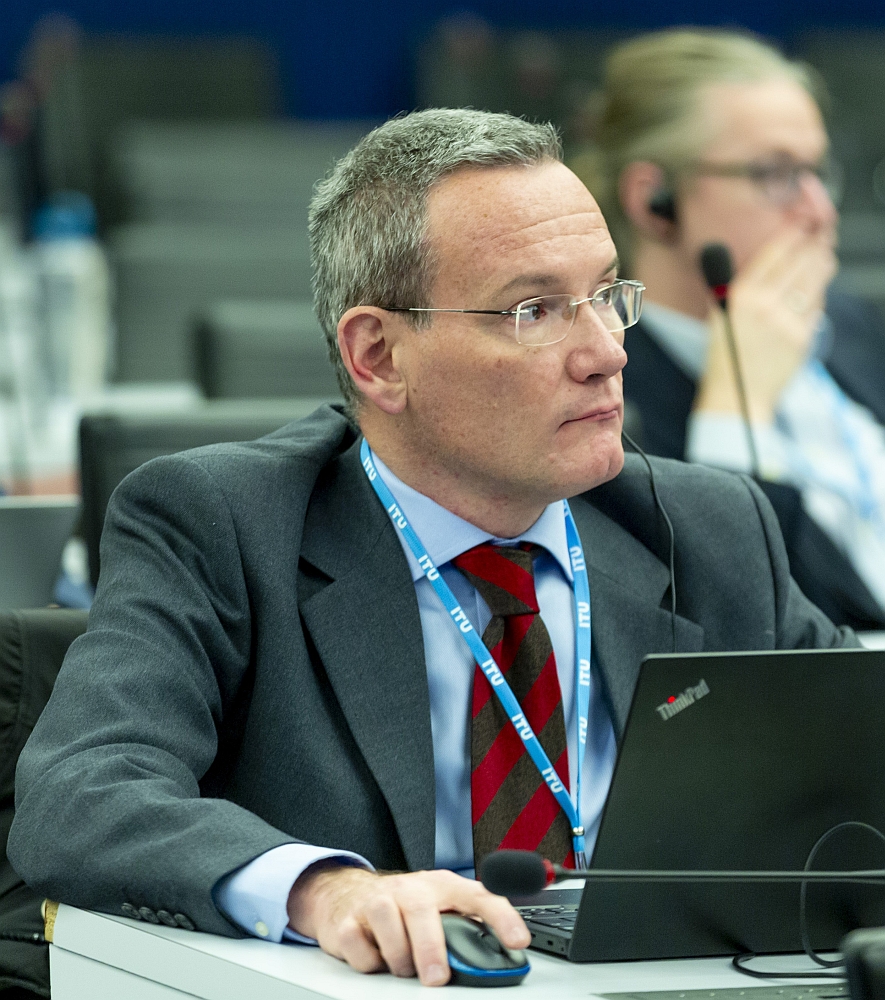
Mauro, you recently became Chair of the IPCEI-CIS Facilitation Group. What is the role of the group?
“The Facilitation Group helps keep the different IPCEI-CIS projects connected as they contribute to the 8ra Initiative. With so many organisations involved, projects can easily drift apart. The group helps ensure that technical developments remain connected and continue to contribute to the same overall objective.
As Chair of the group, I bring in a cross-project perspective. I look at where projects can work together, where technical developments need to be connected and where there is a risk of diverging approaches. Collaboration is important, but so is recognising early when things may start to pull apart.
I come from TIM’s Innovation Department and I have been involved in European collaborative projects for many years. That experience is useful in 8ra because here we have a combination of technical complexity with the challenge of coordinating a large and diverse European ecosystem.”
8ra brings together around 120 partners. What does coordination at this scale require?
“Coordinating an initiative of this size requires continuous effort and attention. Many participants are familiar with Horizon projects and similar collaborative programmes, where structures and responsibilities are often well established. 8ra operates on a different scale and brings together a wider range of actors. For that to work, there needs to be a clear governance structure. Roles, responsibilities and agreed mandates need to be respected. Otherwise, coordination becomes increasingly difficult.
Technical expertise is equally important. Connecting activities across projects requires more than organisational oversight. The Reference Architecture plays a key role here.”
Digital sovereignty is one of the central ideas behind 8ra. What does that mean in practical terms?
“For me, digital sovereignty was one of the most important reasons to get involved in 8ra. In practical terms it means knowing where your data is stored, how it is processed, under which rules services are provided and whether data and applications can be moved when needed.
That is important for a number of reasons. For enterprises digital sovereignty is closely linked to compliance and the ability to avoid dependency on a single provider or infrastructure. For public administrations, it is often connected to security, trust and policy requirements. And it gives citizens transparency about how their data is handled and based on reliable rules.
So it has very practical implications for how digital infrastructure should be designed and operated. A sovereign cloud-edge ecosystem needs technical foundations that allow control, portability and trust. Federation can support this objective.”
Why is federation such a strategic capability for the 8ra Initiative and Europe?
“Federation is not just a technical matter. It allows independent infrastructures to work together without giving up their autonomy. A federated ecosystem does not require everything to be centralised in one place. Instead, it allows different providers and infrastructures to remain independent while still being able to connect and cooperate.
For users and service providers, the practical benefit is portability. Applications and workloads should be able to move across environments without having to be redesigned every time. Without that, services remain tied to individual providers and are harder to scale.”
What has to happen for interoperability to work across the ecosystem?
“Interoperability starts with a shared understanding, so participants need a common language. The important point is that organisations cannot define interfaces, concepts and requirements differently and still expect their systems to work together. This is especially challenging in cloud and edge technologies because the field evolves quickly. Formal standardisation can take time, while technical development moves fast.
That makes the IPCEI-CIS Reference Architecture so important. It provides a common framework, defines key interfaces and includes federation as a core element. It does not mean that every implementation has to be identical, but it gives projects a shared basis from which different implementations can remain compatible and interoperable.
And this is not only relevant for technology providers. Many future use cases depend on distributed data and infrastructure, including industry, public services, research, energy and mobility. If systems cannot exchange data efficiently and securely, Europe will not be able to make full use of the cloud-edge continuum and leverage it for Industrial AI and other critical applications.”
How does your project TIM Edge & Cloud Continuum fit into this picture?
“TIM Edge & Cloud Continuum is TIM’s contribution to the IPCEI-CIS and 8ra vision. The project focuses on a next-generation cloud-edge continuum for digital services.
To us, the connection to the wider 8ra ecosystem is central. We are not developing this in isolation. Alignment with the IPCEI-CIS Reference Architecture is an important part of the work, especially when it comes to interoperability and federation. These are essential if services are to operate in a European multi-provider environment.
The project also reflects a broader objective of 8ra: cloud-edge services should be interconnected, federated and easy to consume. They need to support secure and compliant data management under European rules. This matters for large enterprises, but also for SMEs and start-ups that need trustworthy infrastructure without having to build everything themselves.”
8ra is opening its ecosystem beyond the original IPCEI-CIS framework. Why is that important?
“The original IPCEI-CIS framework was set up several years ago with a defined group of partners. That was an important starting point. But if Europe wants a sovereign multi-provider cloud-edge ecosystem, broader participation will be necessary. New partners can strengthen 8ra by bringing additional expertise, use cases and innovation capacity. So opening the ecosystem is a logical next step.
At the same time, openness only works with clear rules. With around 120 partners, coordination is already demanding. If the ecosystem grows to 200 or 500 partners, convergence will become harder unless governance, responsibilities and expectations are clearly defined.
Therefore, a code of conduct and clear participation rules are important. The challenge is to remain open while still protecting coherence. 8ra needs to be accessible to new actors, but it also needs enough structure to ensure that everyone continues to work towards the same objective: a federated, interoperable and sovereign cloud-edge ecosystem for Europe.”
For Mauro Boldi, one of 8ra’s key challenges is to bring a broad and diverse European ecosystem together around shared interfaces, a common framework and clear rules. If that succeeds, federation will evolve from an architectural principle into the foundation for how Europe’s cloud-edge providers collaborate – without sacrificing their independence to a single central system.
About Mauro Boldi
Mauro Boldi is part of TIM’s Innovation Department and serves as Chair of the IPCEI-CIS Facilitation Group. TIM S.p.A. contributes to the 8ra Initiative through TIM Edge & Cloud Continuum, a project developing cloud-edge services for use cases requiring low latency, guaranteed bandwidth, availability, resilience and security. The project supports interoperable, federated and compliant cloud-edge services for enterprises, SMEs and start-ups. Learn more via the project page.