
Erik Langius on how addressing the ‘wicked problem’ of cloud dependency secures Europe’s digital future.
Voices of 8ra
This interview series highlights the leaders shaping the Multi-Provider Cloud-Edge Continuum across Europe. We explore the strategies and challenges driving innovation within the 8ra Initiative – set against the backdrop of shifting political priorities, rapid technological change, and evolving societal and economic needs that are redefining Europe’s digital future.
April 2026
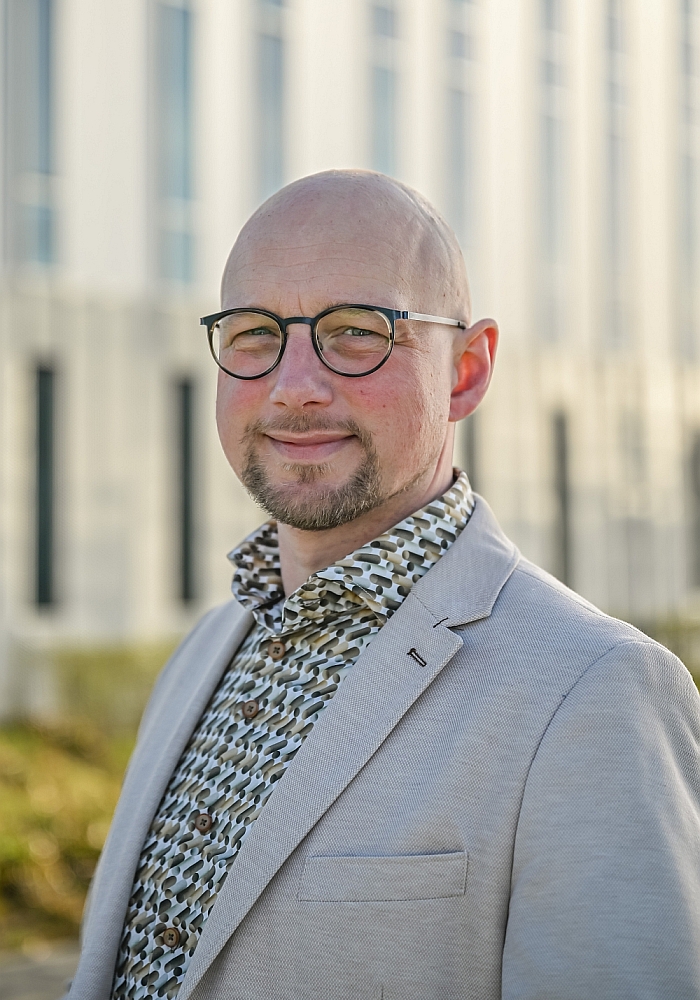
In Conversation with Erik Langius, integrator at TNO and project coordinator for ECOFED
How does the ECOFED project technically address the challenge of vendor lock-in and interoperability?
“We have composed the ECOFED consortium as a sort of ‘mini cloud ecosystem’, bringing together cloud providers, software developers, and internet exchanges. The ECOFED consortium consist of TNO, Info Support, BIT, i3d.net, AMS-IX. We all understand why hyperscalers are so attractive: they make it incredibly easy to get started. For a single European provider, competing with that level of deployment is a significant challenge.
In the ECOFED project, our aim is to build the technology required to federate different cloud service providers. This allows their individual capabilities to be combined into a much richer, collective offering – one that could eventually match the portfolio of a hyperscaler.
As part of our contribution to the IPCEI-CIS Reference Architecture, we are focusing on standardising protocols rather than specific technologies, as the latter often just moves the lock-in from one place to another.”
Beyond the strategic framework, what are the tangible outputs we can expect from ECOFED?
“We are delivering on three levels: a comprehensive architectural design, the protocol specifications – the actual ‘rules of the road’ that allow different systems to communicate – and practical reference implementations. By testing these protocols across various technology stacks within our consortium, we prove that our solution is truly technology-agnostic.”
Could you elaborate on the open-source deliverables and how they contribute to the broader 8ra Initiative?
“On the software side, we are developing reference implementations of these protocols across various technology stacks. In IT, we often say we are ‘eating our own dog food’ – meaning we implement these technologies directly in our partners’ diverse production environments to ensure they are robust.
However, the ultimate success of the 8ra Initiative and ECOFED will be measured by adoption. It is not enough for this to work within our project; to ‘take flight’, the technology must be embraced by providers outside the IPCEI framework. Our mission is to move away from closed ecosystems and create a genuinely open European cloud environment.”
Looking at the broader strategy, what role do organisations like TNO and your consortium partners play in shaping Europe’s digital future? What is the core motivation behind this collective effort?
“Building a more open cloud ecosystem is not something a single company can achieve in isolation; it requires collaboration that transcends individual business interests. At TNO, our mission is to manage this transition – moving from the current reality of closed, unhealthy buyer-supplier relations to a more open playing field.
We are providing the technical and structural support necessary to allow smaller European providers to finally get a piece of the pie. Even though some of our partners are competitors, they have realised they can only solve this together.”
What is the core motivation behind this collective effort? What are the specific benefits for TNO in participating in the 8ra Initiative?
“It is interesting to look back at how the narrative has shifted. When we began shaping these projects around 2021 and 2022, terms like ‘digital sovereignty’ or ‘strategic autonomy’ were hardly used. Back then, we frequently had to explain to stakeholders and potential partners why high dependency and vendor lock-in would become a critical issue. Today, that is no longer a question.
I often use the term ‘wicked problem’ to describe our current situation. A wicked problem is one that everyone experiences, yet no single party ‘owns’ it or can be held responsible for fixing it. Our high dependency on hyperscalers is exactly that – it is a systemic failure in technology governance. You cannot simply point to one company and tell them to solve it; it is a challenge for society as a whole. Our motivation is to provide the actual technology that matches this new political urgency.”
How does this federated structure of the 8ra Initiative specifically enable a better, more secure digital tomorrow?
“The architectural design of 8ra is strictly focused on ensuring there is no central entity controlling the federation. If we created a new central authority, we would simply be creating a new lock-in or a new dependency.
We envision a federation that works in a fully distributed way, much like the internet or even blockchain technology. In these systems, there is no single point of failure; if certain nodes drop off, the network remains robust because alternatives are always available.
The internet functions so effectively because it relies on protocol specifications rather than a single technology. Think of it like a web browser: because the protocols for how websites are built and transported are standardised, you have the freedom to choose your browser. Whether you use it on your phone or your laptop, the website will still function. The communication is standardised, but the technology you use to access it is up to you.
We are applying the same philosophy to the 8ra Initiative. By standardising the protocols but not the technology, we ensure that Europe’s digital future remains open, resilient, and truly sovereign.”
From a practical perspective, how do you manage the transfer of ECOFED’s achievements into a real-world context? How do you ensure that these technical results actually reach the industry?
“In the Netherlands, TNO plays a very active role in technology communication. We keep a large field of stakeholders informed about our progress – specifically through the Dutch Cloud Community, which is the branch organisation for SME cloud providers.
Since the success of ECOFED depends on adoption outside the project, we engage with this community constantly. They understand that because we are working on ‘beyond state-of-the-art’ technology, it takes time before results can be fully operationalised. By keeping them engaged now, we ensure that as soon as the technology is ready, these providers are prepared to step in and adopt the tools we’ve developed. It’s about building the bridge to the market while the technology is still being refined.”
Looking ahead, which tools or platforms from the 8ra Initiative do you hope to see in daily use by thousands of European companies? What is the ‘end game’ for the user?
“Ultimately, I want to see a functioning cloud marketplace that truly enables federation for all providers across Europe. We need a mechanism where demand and supply meet seamlessly.
Imagine a company that needs ten different types of cloud services. In the future, I want them to be able to go to a single point of entry and say: ‘I need these ten services.’ Whether five come from Provider A and the other five from Provider B, the user shouldn’t have to worry about the complexity behind it – it should be handled in a smooth, automated way through the protocols we are building.
To get there, the various European initiatives must strengthen each other. By aligning our efforts, we can create a digital environment where European companies finally have true choice, true flexibility, and true sovereignty.”
About Erik Langius
As integrator at TNO and project coordinator for the Dutch IPCEI-CIS project ECOFED, Erik Langius is part of a consortium of cloud providers, software developers, and internet exchanges to build a truly open, federated cloud ecosystem.
TNO (Netherlands Organisation for Applied Scientific Research) operates as an independent, applied research institute with approximately 5,000 employees. Its mission is to bridge the gap between early-stage scientific knowledge and market-ready industrial applications – particularly in fields where technological uncertainty hinders business growth.